Blackstone’s Town Administrator Interviewing for Bellingham Role — A Moment for Reflection
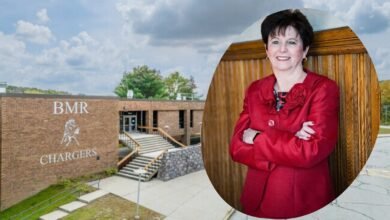
This week, the Town of Bellingham—home to roughly 17,000 residents—is holding interviews for its next town administrator. Among those being interviewed is Chad Lovett, Blackstone’s current town administrator. He is scheduled to meet with the Bellingham Board of Selectmen on Tuesday, July 2 at 6:00 p.m., as part of a two-night interview process.
Lovett joined Blackstone on December 4, 2023, succeeding former administrator Dori Vecchio. That week, he was welcomed into Town Hall with a bit of small-town charm: a visit from the Elf on the Shelf making the rounds. It was a lighthearted gesture, but one that captured the hopeful energy that surrounded his arrival.
In Bellingham, the search for a new administrator follows the retirement of longtime leader Denis Fraine, who held the role for 36 years before stepping down in 2023. That level of stability stands in sharp contrast to the recent turnover in Blackstone, which has seen multiple town administrators, school superintendents, and other leadership changes in just a few years.
As of now, it’s unclear whether the Bellingham search has been narrowed down to just two finalists, but both Lovett and Upton Town Manager Joseph Laydon are among those being interviewed on July 2. Bellingham Selectman Michael Hennessey confirmed on a Facebook comment that interviews are open to the public but not being televised or live-streamed, saying, “Out of fairness to all candidates over both nights, we are not televising the interviews.” The recordings will be available Thursday morning via ABMI, the local cable access channel.
For Blackstone residents, this news lands at a sensitive time. We’ve recently seen the departure of Superintendent Jason DeFalco, and there continue to be open seats on town boards, committees, and commissions. As we look around and wonder why talented leaders leave, we might also ask: Are we making it easy for them to stay?
Leadership doesn’t happen in a vacuum. It needs community support, patience, respect—and participation. If we want strong leaders, we have to be the kind of town that fosters them. That means more than just pointing fingers when things go wrong or complaining online. It means showing up, contributing, and building trust over time.
It’s worth noting: you don’t have to win an election to make a difference in your town. Volunteering on a committee, attending meetings, sharing accurate information, and collaborating with others are all powerful ways to serve.
At the same time, winning a seat or a title doesn’t mean you have all the answers. In small towns, where relationships run deep and long-standing alliances often shape decisions, it can be hard for new voices or fresh ideas to break through. That’s not a criticism of experience—but a reminder that true leadership means listening, adapting, and making room at the table.
Too often, we see people check out or tear down simply because they didn’t get the vote count they hoped for. But just as often, we see people cling to authority without being open to challenge or change. Real progress doesn’t depend on who holds the gavel—it depends on who’s willing to show up, put in the work, and make space for others to do the same.
We don’t yet know what decision Bellingham will make—or what choice Chad Lovett may face. What we do know is that our town, like every small town, is only as strong as the people willing to participate in it.
So maybe the better question isn’t “Who’s leaving?”
Maybe it’s: Who’s staying, who’s showing up, and what are we doing to support them?