Blackstone Town Meeting 2025: What Was Decided and Why It Matters
Understanding Blackstone’s Town Meeting Votes: Budget Cuts, Raises, and Resident Feedback
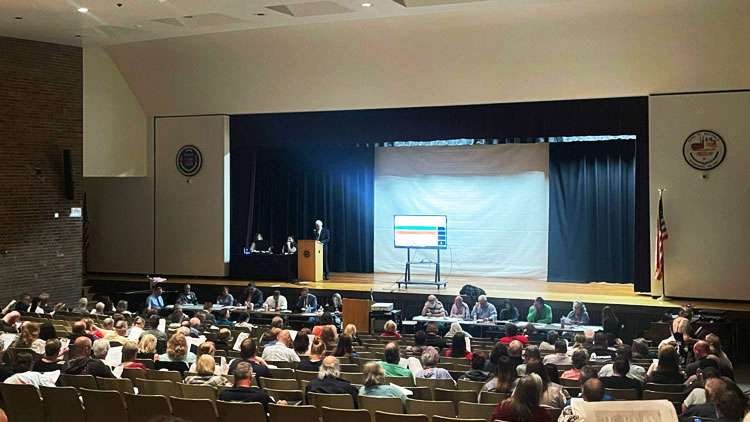
Blackstone residents gathered on May 28 for a long night of civic decision-making, with the Special Town Meeting and Annual Blackstone Town Meeting 2025 spanning nearly three and a half hours. While turnout was still low overall—about 2% of eligible voters—this year saw more attendees than in the past, including some first-time participants. That’s a win for local engagement, and hopefully a sign of more involvement to come.
Here’s a breakdown of the most talked-about moments from the meetings and why they matter for Blackstone’s future.
Special Town Meeting: Ice, Sand, and… Confusion?
During the short Special Town Meeting, a resident questioned a line item which was on several people’s minds about ice and snow removal, wondering what snow we even had this past winter. Town Accountant Lauren Taylor clarified that this budget also covers all salt and sand purchases, and that Blackstone has always budgeted conservatively to avoid year-over-year increases.
All Special Town Meeting articles passed and the meeting ended early, giving everyone a short break before the Annual Town Meeting kicked off at 7:30 PM.
Salary Hikes for Elected Officials? Residents Say “Not So Fast”
One of the most discussed items at Blackstone Town Meeting 2025 was a proposed 24% raise for the Collector-Treasurer and 23% for the Town Clerk. Both positions are elected roles, and residents didn’t hold back.
Community Concerns:
- Many questioned whether such increases are seen in private sector jobs, especially given current financial pressures and uncertain grant funding.
- Others pointed out that these roles are elected, not hired, and expectations around experience and hours are already known when running for office.
- Timing was also an issue—residents learned these increases were only brought up after the original 3% request had already been submitted to the Board of Selectmen.
Ultimately, attendees voted to amend both salary increases down to 3%.
Waste Collection Budget: Ask the Questions
A budget line for waste collection raised questions when a resident—who works in waste management—approached the mic to ask about the sharp increase. The resident said they had emailed the Town Administrator to ask whether the town’s waste and recycling contract would be made public.
The answer: yes, once it’s finalized. Right now, the contract is still under legal review by town counsel.
The resident raised another point: at the recycling center, has the town considered leasing equipment instead of buying it outright?
The budget item and related warrant article ultimately passed, but this exchange was a quiet reminder of something important: when residents have expertise, their questions can be especially valuable. Local government doesn’t have all the answers—it relies on an informed and engaged public. By asking questions and offering insight, even briefly, citizens can help the town make better decisions.
Board of Health: Big Raise, Bigger Debate
The Board of Health’s budget prompted some of the night’s most heated discussions.
The proposal included a stipend increase for the Board of Health Chair and Committee members, and a 27% increase (from $30,900 FY2025 to $39,357 FY2026) for the Health Agent, tied to five more hours per week. The raise had been approved by the Board of Selectmen, the Town Administrator, and Finance Committee. Still, residents questioned whether the qualifications aligned with the compensation and how the raise compared with similar roles in other towns.
But as the conversation wore on, things got tense. Comments and critiques—especially those related to job qualifications—may be rooted in fact, but the line between professional scrutiny and personal offense can be a slippery one. What’s intended as due diligence can still land as personal, especially in a tense room.
Some in the room grew visibly uncomfortable. There were interruptions and shouts from the audience—what was said isn’t clear, but the tone unmistakably shifted. What started as a discussion about numbers quickly became a flashpoint for something bigger: How do we talk about accountability and standards in a way that’s tough but still respectful? And when tensions rise, how do we keep the focus on facts—not feelings?
In the end, the article passed as written, but the discussion reflected a deeper challenge: How do we hold people accountable while still being decent to each other? And how do we make space for hard questions without turning town government into a battleground?
Water Meter Replacement: A Necessary Upgrade, But Not This Time
Article 16 proposed a $1.5 million plan to replace over 2,800 aging water meters across town and update the related software. Town officials explained that this would improve billing accuracy and relieve the Department of Public Works (DPW), where a small crew still reads meters manually—a process that can take one to two weeks per cycle.
DPW Superintendent Jim Sullivan, who has shared many of these details during past public meetings, reiterated that most meters are over 20 years old. The proposed upgrade would be installed by a private contractor, with the full project completed in 6–8 months if approved.
Still, some residents had concerns. One asked: Why not replace meters only when homes are sold? There was a question on the overall cost, particularly when newer homes—like their own—already have newer meters. They also raised concern about contractors entering private homes to do the replacements.
Sullivan clarified that the cost per meter is about $400 and that the upgrade would affect a lot of properties, including businesses. Another town official emphasized that the new system includes leak detection: if a pipe bursts while you’re on vacation, for example, the system can flag abnormal water use and alert the water department—potentially saving homeowners money and damage. Simply put, officials echoed that this was about more than just reading meters—it was about adopting technology the town should have had a decade ago.
Tensions rose when the same resident returned to suggest that, since the upgrade would reduce manual labor, perhaps the water department’s salary budget should also be reduced.
Sullivan pushed back, pointing out the reality many small towns face: “Maybe where you came from, there’s 20 people in the water department. We have like, three. And they do water, sewer, highway, plowing—whatever we need to get done.”
Ultimately, the article failed to pass.
And yet the question remains: If necessary upgrades are always too expensive, how will towns like ours ever move forward with long-overdue improvements?
Confusion Over Amendments and FinCom Votes
The meeting saw some confusion when the Finance Committee (FinCom) did not recommend two articles:
- Article 25 (Roosevelt Park Lighting)
- Article 34 (Blackstone Valley Tech Stabilization Account)
When Article 25 was motioned to be “passed over,” FinCom proposed an amendment—confusing attendees and even requiring clarification from Town Counsel and the Moderator.
It was a reminder that even longtime Town Meeting attendees can struggle with unclear procedures or unexplained recommendations. Better transparency and communication could make this process less intimidating—and more effective—for everyone in the room.
Roosevelt Park Lighting: Scaled Back, Still Moving Forward
FinCom did not recommend Article 25, which was originally requested at $200,000 to upgrade electrical and install new lighting at Roosevelt Park. That amount was reduced to $35,000 through a voter amendment—enough to address critical electrical repairs and fund planning and design work. Parks and Recreation Chair Celeste Langlois supported the revised funding and appreciated the compromise.
The amendment passed, but the underlying concern remained: Why keep breaking the project into phases, instead of just funding it and getting it done?
It seems likely the town will return at a future Special Town Meeting to request funds for the next stage. Will this piecemeal approach make sense? Why not commit now, budget for the full project, and avoid paying for more studies down the line? The amendment gives the town a clearer picture of what’s needed and makes it fiscally responsible —but it also means voters will be asked again: What exactly do we want to do, and how much are we willing to spend to do it?
BVT Stabilization: Passed With Debate
Though not recommended by FinCom, the BVT (Blackstone Valley Tech) stabilization fund passed with amendments.
BVT Superintendent-Director Dr. Michael F. Fitzpatrick—recognized earlier that evening by the Board of Selectmen—defended the request and seemed frustrated by the sudden opposition. Millville had already approved this article during their May 12 Town Meeting, and Blackstone ultimately followed suit.
Harnett Middle School Playground: A Vote for the Kids
While recommended by key boards, the Middle School Playground request faced hesitation due to possible future school reconfigurations.
FinCom Chair Jeff Silverstein, also on the School Building Committee, cautioned that we may soon move students elsewhere and this is not the time to be paying for a playground.
But BOS Chair Dan Keefe and School Committee Rep. Kerri Gaudette emphasized the need to serve students attending the school right now. The $52,745 request (Blackstone’s 75% share) passed—Millville had already approved their share.
Civic Engagement Is Growing—But We Still Need More
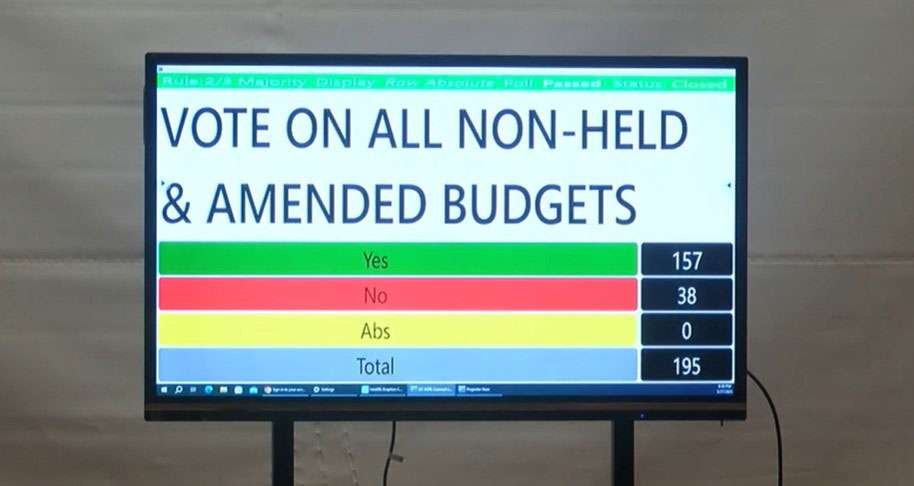
This year, it looks like 157 voters voted to pass the 2026 budget—up from last year’s 126 yes vote. That’s about 1.97% of Blackstone’s 7,956 registered voters this year, and yes, it’s an improvement. Even better, many were first-timers!
But it’s also a reminder: public input matters. Many of the issues debated Tuesday had already been discussed during public meetings and also at the Public hearing in May 12—with fewer than five residents attending.
Final Thoughts: Let’s Keep Showing Up
The energy, questions, and passionate debate at the Blackstone Town Meeting 2025 showed that residents that show up care deeply about where their tax dollars go and how their town functions.
Let’s keep the momentum going.
Show up. Speak up. Stay involved.
Because your voice really does matter here.
Watch the Special and Annual Blackstone Town Meeting
Updated 6PM with Water discussion details as the Town official video recording became available. We encourage the community to share their perspectives in the comments!